Prof. Jennifer Bates
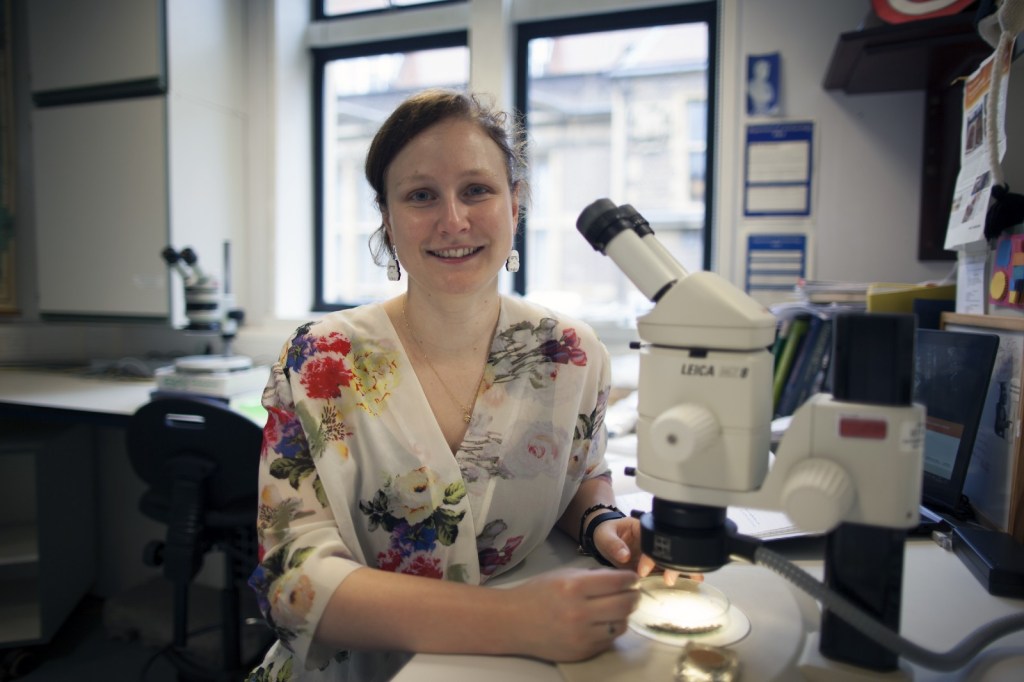
Associate Professor of Archaeological Science
Office: 5-416, College of Humanities, Seoul National University, 1 Gwanak-ro, Gwanak-gu, Seoul, South Korea 08826
jbates01@snu.ac.kr
Departmental Website: https://humanities.snu.ac.kr/en/academics/faculty?md=view&profidx=199
ResearchGate profile: https://www.researchgate.net/profile/Jennifer-Bates-9
Academia.edu profile: https://snu-kr.academia.edu/JenniferBates
Google Scholar profile: https://scholar.google.com/citations?user=9SC8BusAAAAJ&hl=en
Twitter & Bluesky handle: @drjenniferbates
Curriculum Vitae
PhD, University of Cambridge, 2016
Bio
Prof. Bates began her career in archaeology at a young age when digging on a ‘mound’ (most likely backfill from house extensions) in her garden. Using methods gained from watching TV’s Time Team and books from the library she constructed a 2x2x2m deep trench and eventually reached ‘real’ stratigraphy and found an Iron Age Vectis ware pot. This discovery led her to be invited to work with her local archaeology unit on several digs, and to a life long passion. This was fueled by an A-Level in Archaeology and then BAs and MAs in the subject. She gained her PhD at the University of Cambridge exploring urban food supply, climate impacts and farmer agency in the Indus Civilization of Bronze Age South Asia. This acted as a spring board for a career in archaeobotany and archaeological sciences, and she went on to do post-docs at Cambridge, Brown and UPenn before joining SNU in 2021. She currently holds the post of Associate Professor of Archaeological Sciences at SNU specialising in archaeobotany, South Asian prehistory, foodways, and climate reconstruction and modelling.


Areas of interest
Prof. Bates’s research foci include the prehistory of South Asia, with interests in how people engage with their environments, food resources and economic, social and climatic surroundings. To do this she works with plant remains, both macrobotanical (charred seeds primarily) and microbotanical (mainly phytolith) remains. She has published numerous works on the subject of Indus Civilization foodways, agriculture and climatic change, Southern Indian Neolithic to Iron Age cooking, and Mesolithic Ganges rice domestication. Prof. Bates has also worked in many other regions of the world and time periods. In recent years she has branched into other areas of the world and materials, and is working on projects including diatoms, residues and isotopes, as well as climate modelling, resilience theory, affordances theory, and human-ecological niche-construction theory. Her major project, Indica, is currently working to combine many of these and taking a Slow Archaeology approach to reconstruct ancient agricultural and food systems in the Ganges Neolithic to historic periods through a multi-proxy methodology. Prof. Bates is currently running the Ashmounds, KWG LC6k and Indica Projects, of which more information can be found on the Research page of this website (links below).
Prof. Bates is taking on Masters and PhD students and welcomes enquiries about this. Please see the contact page for more details.
Her published work can be found on her ResearchGate profile: https://www.researchgate.net/profile/Jennifer-Bates-9 and Academia.edu profile: https://snu-kr.academia.edu/JenniferBates, and she regularly posts to twitter and bluesky under the handle @drjenniferbates
Excavations & Field Work
As an archaeological scientist and field archaeologist, Prof. Bates studies the long-term development of agriculture and land use across the world, but has a particular interest in South Asia. Her main specialism is archaeobotany, the study of how past peoples used and engaged with ancient plants. Building from this foundation, she has been involved with multiple projects as the specialist archaeobotanist, including work in Malta, Norway, the UK, Italy, Libya, Iraq, South Korea and across many regions of India. She has also been thinking about sustainability and resilience, using big data gathering and modelling within the TwoRains projects and LandCover6k projects. Her work has also branched into field and lab experiments, including exploring ancient alcohol and foodways, and the upcoming rice growing systems experiments pan-Asia.
Currently Prof. Bates is running a major field project in collaboration with Banaras Hindu University, India (co-PI Prof. Vikas Kumar Singh) with permits and support from the Archaeological Survey of India. The project, Indica, is supported by funding from the SNU Creative Pioneers Fund, and has excavated Nindaur, Sakas and Tokwa to explore early rice domestication and agricultural developments over the Neolithic through historic periods in the Ganges Plains of north India. More excavations are planned for the next three years.
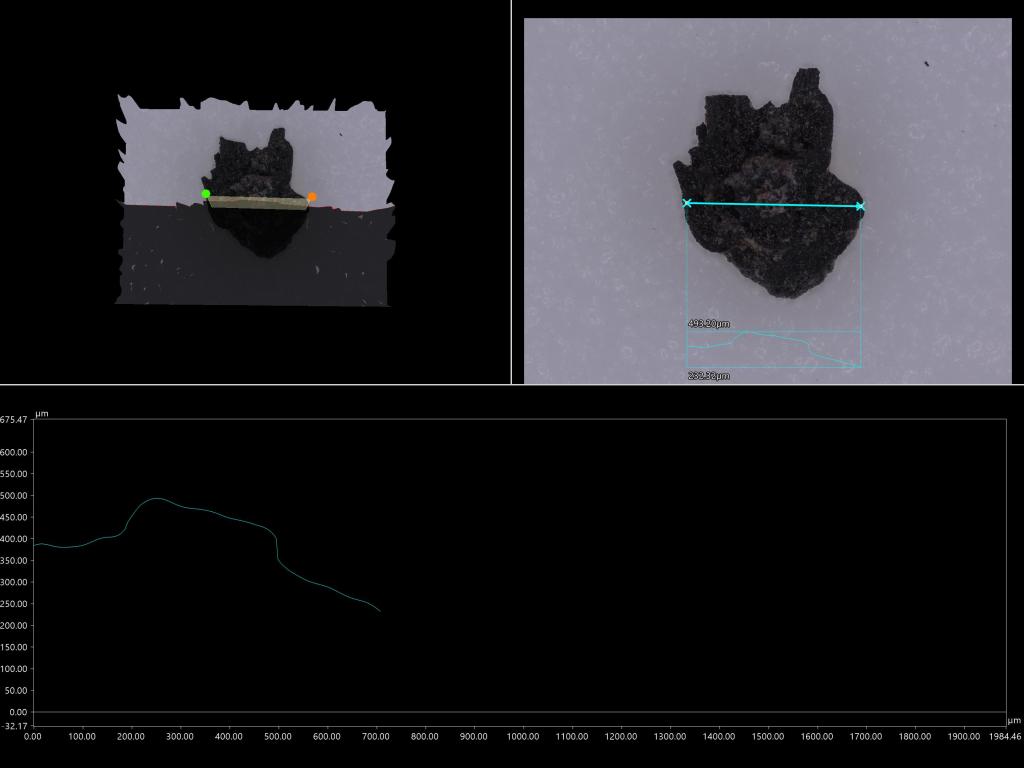
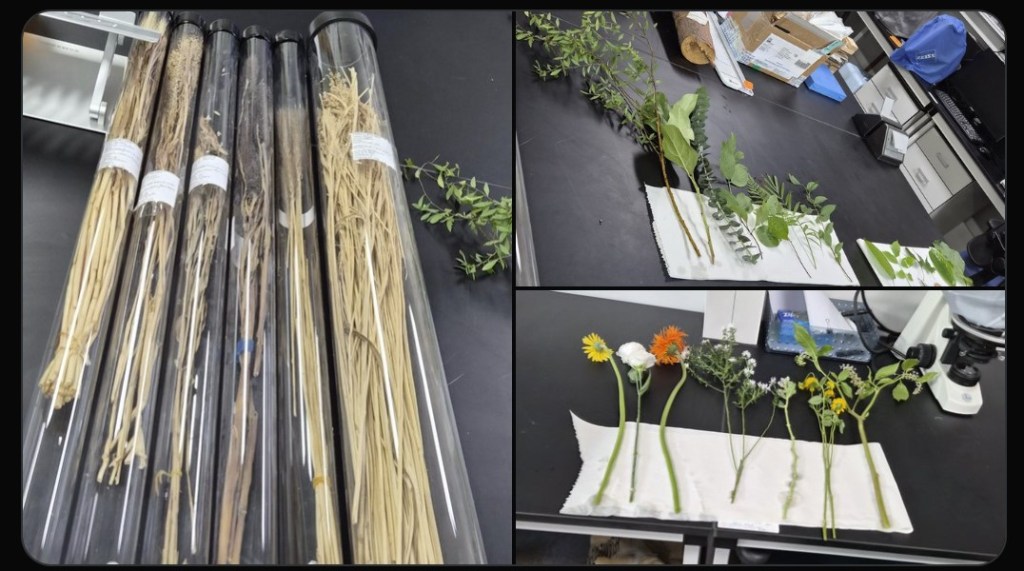

 SNU Archaeological Labs