
Research
Prof. Bates’s research focuses on the development agriculture and land use in South Asia. Her interests center around the relationships between people, plants and the environment, and how decisions made by people affect their worlds at different scales, from the micro-local to the climatic. As an archaeobotanical specialist, her main research contributions range from discussions on deep time landscape change through to domestication trajectories to reconstructing the urban-rural interactions in ‘complex’ civilizations. Prof Bates’s current projects are theoretically centered on using niche construction theory, human ecology, and Slow Archaeology to provide more grounded and wholistic images of the past.
Having begun in British and European prehistory, Prof. Bates moved over to South Asian archaeology during her university degrees. Starting in the Indus Civilization (see also continued work there) where she looked at the agency of farmers during urbanization, deurbanization and climate events, she has since moved across to the Middle Ganges Plains to think about rice domestication and the development of agricultural systems through to the historic periods. Her main project is currently the Indica Project, a multi-university collaboration that has MOUs with Banaras Hindu University, India (co-PI Prof. Vikas Kumar Singh). This project’s goal is to explore the complex nature of rice use in the Neolithic through later time periods, specifically tracking how rice, as a water-loving plant, was domesticated but also woven into other systems of food production and procurement, landscape modification, and foodways.
Other projects include exploring land use change globally through the larger LandCover6k team. This global multi-partner initiative aims to develop better data intigration of land cover and land use from deep time for ALCC (Anthropogenic Land Cover Change) modellers to use in climate hindcasting and forecasting. This is particularly important as we move into the Anthropocene, a topic Prof. Bates and the lab have been extensively researching and writing on. Prof. Bates has led the South Asia and Korean Working Groups in this effort.
Additional projects in recent years include work on Ashmounds, large artificial hills of burnt cattle dung in South India, as well as collaborations with the EHLTC and SILT projects from UPenn. Projects also currently underway include the analysis of historically collected materials from Indus sites in north India, analysis of irrigation systems around the Mesopotamian Royal City of Ur, and study of the Palaeolithic landscapes of the UK.
Prof. Bates also oversees multiple student projects in the lab and welcomes students and post-doc applicants with ideas/materials from any part of the world.

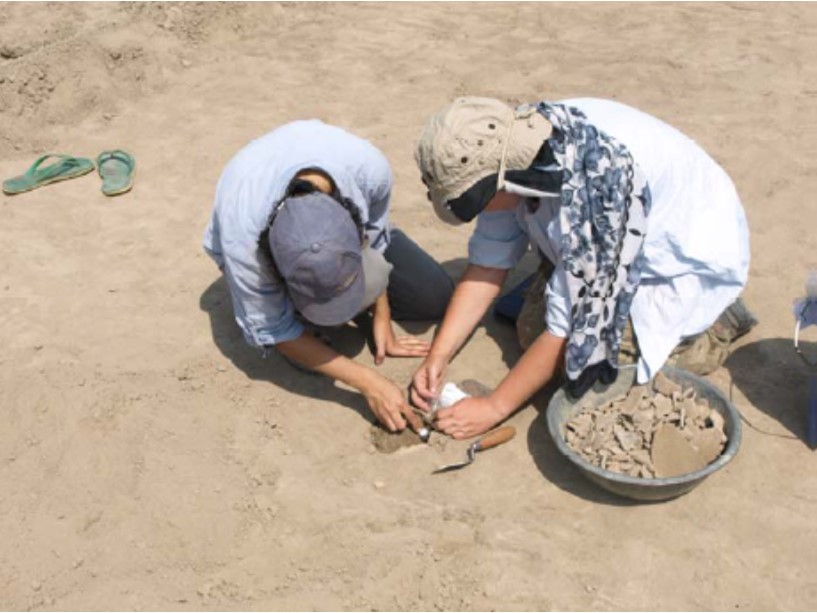

 SNU Archaeological Labs